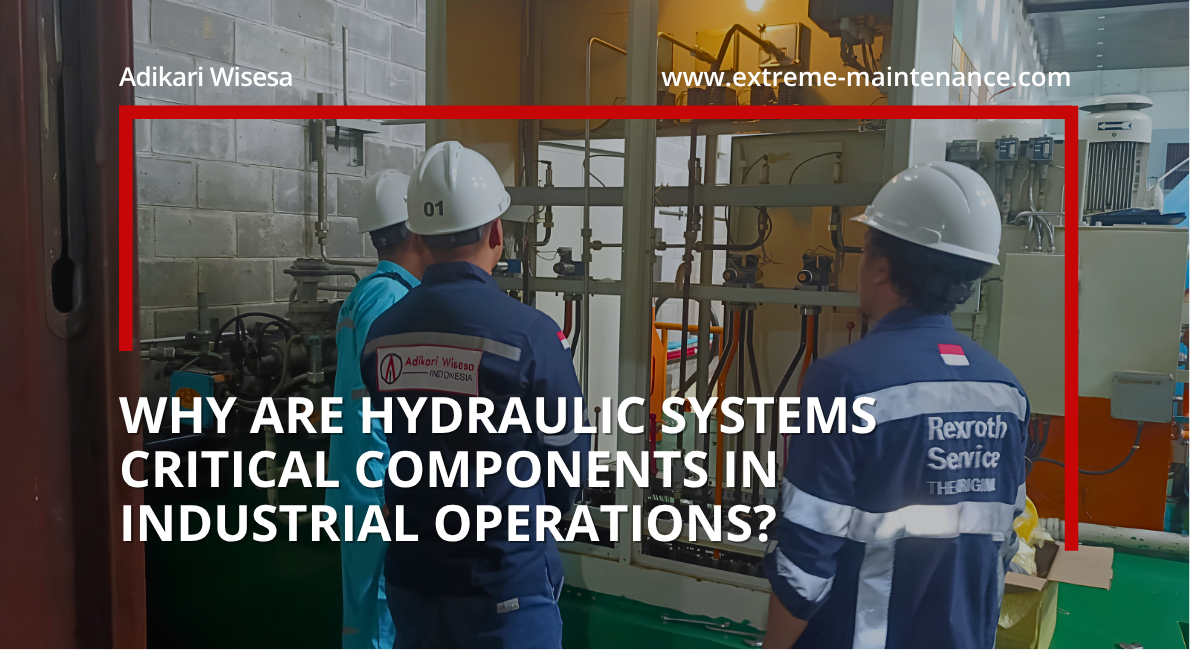
Behind the smooth operation of modern industrial processes lies a system that often goes unnoticed but plays a vital role: the hydraulic system. From lifting, pushing, and rotating to controlling heavy loads, hydraulic systems provide the driving force for a wide range of equipment across industries such as mining, smelting, manufacturing, power generation, oil & gas, material handling, and heavy equipment.
The reliability of a hydraulic system not only determines machine performance but also directly impacts productivity, energy efficiency, workplace safety, and operational continuity. When a hydraulic system performs optimally, production remains stable and efficient. However, any decline in its performance can lead to reduced production capacity, increased maintenance costs, and even unplanned downtime.
What Is a Hydraulic System?
A hydraulic system is a power transmission system that uses pressurized fluid to convert energy into mechanical motion. Pressure generated by a hydraulic pump is transmitted through pipes or hoses to actuators, such as hydraulic motors or hydraulic cylinders, enabling them to produce powerful lifting, pushing, and rotational forces with exceptional precision. Because hydraulic systems can transmit large amounts of power efficiently, they are widely used in applications requiring high torque, precise control, and reliable performance in demanding operating environments.
So, why are hydraulic systems considered one of the most critical components in industrial applications?
1. Exceptional Power-to-Weight Ratio
One of the key advantages of hydraulic systems is their outstanding power-to-weight ratio. Despite their relatively compact size, hydraulic components can generate tremendous lifting, pushing, and rotational forces capable of handling loads ranging from tens to hundreds of tons. This capability makes hydraulic systems ideal for applications such as excavators, conveyor drives, hydraulic presses, cranes, and mineral processing equipment, where high power output is required without significantly increasing equipment size or weight.
2. High Precision and Responsive Control
Hydraulic fluid is virtually incompressible, allowing force to be transmitted quickly and accurately throughout the system. By regulating pressure and flow through proportional valves or servo valves, hydraulic systems provide precise control over actuator speed, direction, and positioning, even under full load. This high level of responsiveness is essential for industrial processes that demand accuracy, repeatability, and consistent product quality.
3. Built-In Overload Protection
Another major advantage of hydraulic systems is their integrated overload protection through pressure relief valves. Whenever system pressure exceeds the preset limit, the relief valve automatically opens to redirect excess fluid back to the reservoir. This protects pumps, actuators, piping, and other hydraulic components from excessive pressure, helping prevent catastrophic failures while improving overall system safety and reliability.
4. Flexible Power Transmission
Unlike mechanical drive systems that rely on shafts, gearboxes, chains, or belts and require precise alignment, hydraulic systems transmit power through pressurized fluid flowing inside hoses or pipes. This approach provides significantly greater design flexibility. Hydraulic pumps and actuators can be installed in different locations without requiring a direct mechanical connection, making hydraulic systems ideal for complex machinery and applications with limited installation space.
5. Continuous Duty Capability
Many industrial facilities operate 24 hours a day, 7 days a week, requiring drive systems that can maintain consistent performance over extended periods. Hydraulic systems are specifically designed for continuous-duty operation, provided that hydraulic fluid quality, cooling performance, and component condition are properly maintained. Their ability to deliver stable torque over long operating cycles makes them highly suitable for heavy-duty applications such as conveyors, crushers, hydraulic presses, winches, and mineral processing equipment.
Hydraulic systems have become critical components across modern industries because they combine an exceptional power-to-weight ratio, precise and responsive control, outstanding durability in harsh environments, built-in overload protection, flexible power transmission, and continuous-duty capability. These characteristics make hydraulic technology one of the most reliable solutions for heavy-duty applications that demand high performance and operational reliability.
By implementing effective maintenance strategies supported by Condition-Based Monitoring (CBM) and Predictive Maintenance, organizations can maximize hydraulic system reliability, extend equipment service life, reduce maintenance costs, minimize unplanned downtime, and ensure safe, efficient, and sustainable industrial operations.